
Soju holds the title of world most consumed spirit. Over vodka. Over rum. Over Jager bombs! And even though its percentage sits at twenty, it’s easily consumed – and it works on you just as effortlessly. That’s true of Korea’s cuisine, too.
The sweet, meaty, smoky and fermented flavours, though similar in use, own different territories on the palate. And they’re on display in all of the Korean-focused dishes of Namu’s globally spanning menu.
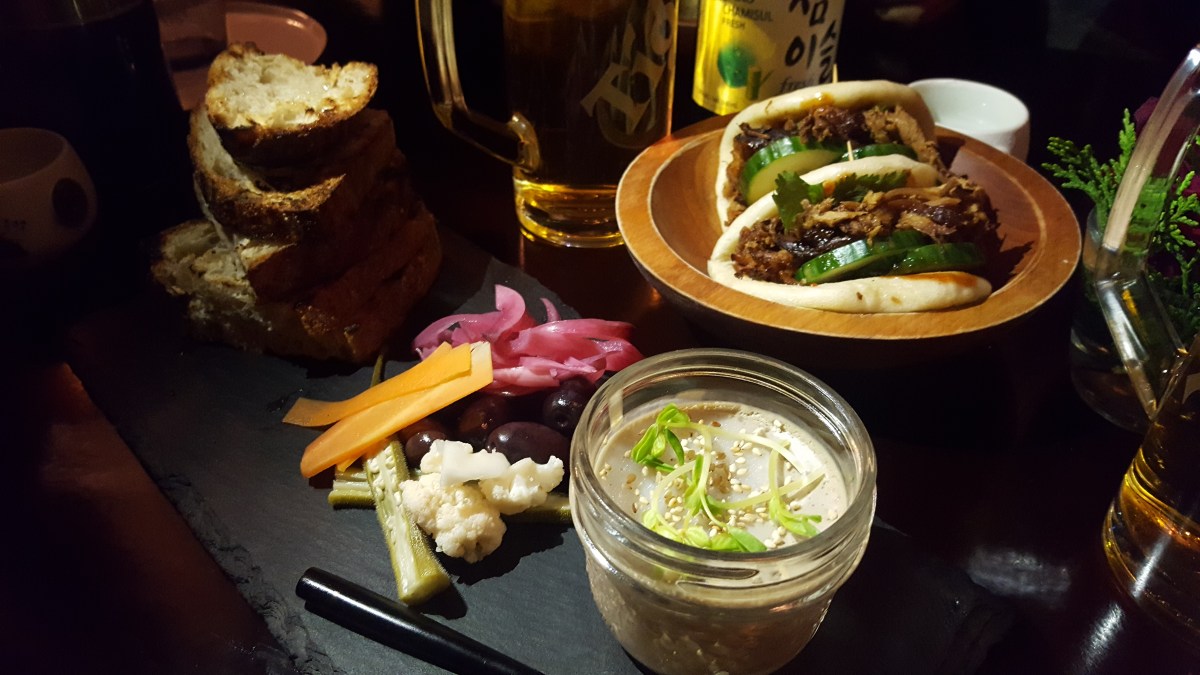
To start, the lobster and shrimp dumpling bao, twisted and ribbed, rest in a garlic and yellow curry bisque for a succulence-meats-comfort bite. The handmade steam buns are a must. Slightly thinner than the norm, the pillowy steamed buns with the playful gumminess and exterior tackiness are filled with either crunchy fried boneless chicken thighs, panko eggplant, shrimp croquettes or pulled pork in a basement baritone of umami XO sauce.
Caleb’s miso ramen is almost porridge thick and so deeply infused with miso that a peanut flavour prevails in the chicken broth, heightened by pulled pork, smoked bacon and a sous-vide egg. The bacon doesn’t end – in the Asian dishes or elsewhere – especially with the “crispy & juicy” pork belly ssam.
A long slab of slow-roasted-then-fried pork belly is presented alongside the classic ssamjang sauce – a thick pasty sauce flavoured with sesame oil, onion and brown sugar to cut through the pork. Wrapped up with fried kimchi in bib lettuce, it’s a deceitfully healthy looking and light option for a chilly Friday night and the perfect transition into genre-bending dishes on the menu whose Asian dishes were flawless but the Pan-American and European variations were less so.
There’s urgency for a new term to supplant the stomach-shuttering, one-foul-swoop naming agent: fusion. Namu isn’t fusion. It’s a Korean restaurant bent on sampling different tracks of global cuisines – from the far west, like the Seoul poutine, to neighbouring countries of the same continent (namely, creating the charred Asian eggplant and leek borani that riffs off Iran’s classic appetizer served with wonton chips).
From the French, there’s a Cumbraes chicken liver paté completely stripped of all Korean influence. Spread on charred slices of Dear Grain sourdough, the paté, with mineral undertones, is so finely puréed it glistens like peach-pink soft serve on a hot night.
Tacos come more in the form of tostadas and appear closer in size to an appetizer than a main. Four small piles of minced ahi tuna and avocado rest in the middle of brittle gyoza shells, sprinkled with furikake. Then there’s the burger.
The effort to Americanize was clear with the inch-thick triple-A paddy topped with cheddar, smoked bacon and beer mustard. But the bulgogi-seasoned beef resulted in an overwhelming sweetness that overshadowed the compilation further imbalanced by the butter-sweet house brioche bun.
It’s tough to do one thing well, let alone a number of dishes from around the world corralled by a Korean-influenced hand. But Namu, meaning tree in Korean, does it better than most who spread so far to venture into the borderless world of mixed cuisine.
 .mike
.mike 